


Tokyo in November 2026: A First-Time Visitor's Guide to Autumn Leaves, Weather & Kagurazaka
Updated: 1 day ago

Is November a Good Time to Visit Tokyo?
Yes. Tokyo in November is crisp, clear and comfortable, with far more sunshine than in September or October. In 2026, the autumn colors are expected to arrive late in the month, with ginkgo at its best from around November 26 and maples from around November 28. It is not a quiet month, though: it is one of the busier months for international visitors, and the long weekend of November 21–23 is especially crowded.
If you arrive before the last week of the month, look for autumn color uphill rather than in the city — see "Visiting in Early or Mid November?" below.

Tokyo in November: Weather, Temperatures and What to Wear
Autumn skies are one of the best reasons to visit Tokyo in November. Sunshine covers about 51% of the possible daylight hours, up from 36–37% in September and October and above the annual average of 46% (2010–2025). Before November, the autumn rain front and typhoons often keep the skies grey. As winter-type pressure patterns begin to arrive, the Pacific side of Japan turns drier and clearer.
The air cools steadily through the month. According to the Japan Meteorological Agency's 1991–2020 daily normals, the average temperature is about 15°C on November 1 and about 10°C on November 30. Mornings and evenings feel much colder than afternoons, so layers work better than one heavy coat. Some rain is normal, so carry a compact umbrella.
Period | Average temperature | What to wear |
Early November (1–10) | 14.4°C | A sweater or light jacket over a shirt |
Mid November (11–20) | 12.5°C | A sweater and a medium jacket or light coat |
Late November (21–30) | 10.7°C | A coat and scarf, with layers you can take off indoors |
These figures are 30-year normals, not a forecast for 2026. Japan Meteorological Corporation (JMC) expects autumn temperatures across Japan to run higher than average this year, so it may feel slightly warmer than these numbers.
How Busy Is Tokyo in November? Crowds and Holiday Weekends
November is not a quiet month. International visitors book about 8% more hotel nights in Tokyo than in an average month, and domestic travelers book close to an average number of nights (2023–25 average). The crowds gather on particular days, so it helps to know them.
Saturday, November 7 (Ichi-no-Tori): the first Rooster Day fair. Otori Shrine in Asakusa gets very crowded on a weekend, so consider the second fair on Thursday, November 19. The fairs run around the clock, from midnight to midnight.
Tuesday, November 3 (Culture Day): a national holiday. Shrines and gardens are busier than on an ordinary Tuesday. Meiji Jingu's yabusame, scheduled for around 1:30 p.m., is free to watch but standing only, so arrive early.
Sunday, November 15 (Shichi-go-san): families in kimono visit shrines throughout the day.
Saturday to Monday, November 21–23: a three-day weekend, because November 23 is Labor Thanksgiving Day. Domestic travelers head for day-trip destinations, and Kagurazaka hosts a Fukui Prefecture festival on the 22nd and 23rd. This weekend falls a few days before the foliage peak.
Saturday and Sunday, November 28–29: the first weekend when both ginkgo and maples are forecast to be at their best (ginkgo from around November 26, maples from around November 28), so famous foliage spots are likely to be very crowded, especially from late morning. Kagurazaka's Bishamonten Zenkokuji Temple also hosts the Dyers' Thanksgiving that weekend, 10:00–16:00.
Two habits make a big difference: arrive at popular gardens and shrines early in the morning, and save them for a weekday if you can. Book restaurants and guided experiences early for weekend dates.

Tokyo in Early November: Culture Day and the Start of the Festival Season
Early November is the mildest part of the month, with average temperatures around 14°C. A light jacket is usually enough.
November 3 had previously been observed as Meiji-setsu, marking Emperor Meiji's birthday. After World War II, the same date became Culture Day: the Constitution of Japan had been promulgated on November 3, 1946, and the new holiday was established in 1948 to celebrate freedom, peace and culture. Meiji Jingu, the shrine dedicated to Emperor Meiji, holds its autumn grand festival around this date, and the program includes yabusame, traditional mounted archery, scheduled to begin at around 1:30 p.m. on Tuesday, November 3. Watching is free, with no reservation and no paid seating. Visitors stand along the West Approach and on the grass beside it. Riders in historic costume shoot at targets while galloping. Arrive early for a good spot, and check the shrine's announcement for schedule changes.
Culture Day is also when neighborhood festivals reach their finale. In Kagurazaka, a local culture festival that began on October 10 ends on November 3 with a free street-drawing event (see the Kagurazaka section below).

Tokyo in Mid November: Shichi-go-san and the Tori-no-Ichi Markets
Average temperatures fall to about 12–13°C, so pack a sweater and a medium jacket.
Shichi-go-san (November 15). Children aged three, five and seven visit shrines in kimono to give thanks for growing up. The custom comes from a time when many children did not survive early childhood, so each of these ages was a milestone worth marking. At three, children began to grow their hair; at five, boys first wore hakama; at seven, girls first tied a formal obi. Families also carry chitose-ame, a long, thin candy that stands for a long life. In 2026, November 15 is a Sunday, so expect busy shrines. Explanations for why the date is the 15th vary.
Tori-no-Ichi (Rooster Day fairs). On the "Days of the Rooster" in November, shrines named Otori or Washi hold fairs selling kumade, decorated bamboo rakes. The rake is a farm tool, so it came to symbolize raking in good fortune, and businesses traditionally buy a bigger one each year. Shrines keep their own origin stories: Otori Shrine in Asakusa links its fair to Yamato Takeru, who is said to have visited on a Day of the Rooster in November to give thanks after a victory. The fairs also developed as autumn markets. In 2026 the first fair (Ichi-no-Tori) is on Saturday, November 7, and the second (Ni-no-Tori) is on Thursday, November 19. There is no third fair this year. Otori Shrine (Washi Shrine) stands in Taito Ward, near Asakusa, and enshrines Ame-no-Hiwashi-no-Mikoto and Yamato Takeru. Each fair day runs from midnight to midnight, and other shrines, including Hanazono Shrine in Shinjuku, hold fairs on the same days. Restaurants in Kagurazaka keep one at the entrance all year (see the Kagurazaka section below).

Tokyo in Late November: Ginkgo and Maples
Average temperatures drop to about 11°C by the last ten days. Bring a coat and a scarf.
Leaves change color in response to a run of cold weather, so the timing depends on how cool the autumn is: a cool autumn brings the colors forward, and a warm one pushes them back. That is why this year's temperature outlook matters.
Japan Meteorological Corporation (JMC), in its second 2026 forecast issued on October 1, puts the best viewing of Tokyo's ginkgo trees from around November 26 and its maples from around November 28, both close to the seasonal average. These dates mark the first day when most of a tree's leaves have changed color, so good viewing continues for some time afterward. Ginkgo turns color at slightly warmer temperatures than maples, which is why it usually peaks a little earlier. In the lowlands of eastern Japan, the maples are expected to be at their best from late November into mid-December, so good viewing continues into early December.
The Japan Weather Association (JWA), which issued its own first forecast on the same day, points the same way. A cool first half of September has already brought early color to a few high-altitude spots. But temperatures have run above average since late September and are expected to stay high through November. As a result, the colors in eastern Japan are forecast to arrive on time or later than usual, especially in the lowlands, where central Tokyo sits. If the dates above shift, they are more likely to slip later than to come earlier.
Colors vary by park and by tree, and forecasts are revised through the season, so treat these dates as a guide rather than a promise and check the latest forecast before you go.
The three-day weekend of November 21–23 comes a few days before both peaks, so expect ginkgo that is partly turned and maples that are still early. The weekend of November 28–29 is when both are expected to be at their best.
Things to Do in Tokyo in November
Tokyo has more to offer in November than one article can list. These are the choices that fit the season best.
Where to See Autumn Leaves in Tokyo
For ginkgo, the avenue at Meiji Jingu Gaien is the classic. For a garden with both ginkgo and maples, Shinjuku Gyoen and Rikugien are popular. All three are at their best in the last week of November. Arriving earlier in the month? See the next section.
Visiting in Early or Mid November? Follow the Leaves Uphill
Autumn color doesn't arrive everywhere at once. Leaves turn as temperatures fall, and temperatures fall first where the land is higher. That is why color starts in the mountains every year and works its way down to the city — and why the date you arrive in November decides where you should look.
In 2026, central Tokyo's ginkgo and maples are forecast to be at their best only from around November 26–28. If your trip falls in the first two-thirds of the month, the city's trees will most likely still be green. The color will be uphill:
Mt. Takao (599 m, about an hour from central Tokyo by train): Weathernews forecasts peak color from around November 12 — roughly two weeks ahead of the city center. On weekends, start early; the trails and cable car fill quickly.
Lake Kawaguchiko (about 830 m, at the foot of Mt. Fuji): peak color is forecast from around November 15. The Fuji Kawaguchiko Autumn Leaves Festival runs November 7–29, with the maple corridor illuminated until 9:00 p.m. This is a full day trip.
The same logic works in reverse. By the time central Tokyo reaches its peak in late November, the leaves on Mt. Takao are expected to begin falling (from around November 29). Forecasts are revised as the season develops, so check the latest before you go.
Tokyo's Winter Illuminations Begin in November
There is another reason November evenings feel different: they start very early. Tokyo's sunset moves from 4:46 p.m. on November 1 to 4:28 p.m. on November 30 — more than two and a half hours earlier than in late June, and within a minute or two of the earliest sunset of the year. By 5:00 p.m., it is fully dark.
Tokyo's answer to these long evenings is light. Unlike Tori-no-Ichi or Shichi-go-san, the city's illuminations are not old traditions. They are a modern response to the shortest evenings of the year and to the run-up to Christmas, which in Japan is a festive, commercial and romantic season rather than a religious one. Most switch on during November:
Roppongi Hills (Keyakizaka): November 5 – December 25, 2026
Tokyo Midtown Hibiya: November 12, 2026 – February 28, 2027
Marunouchi Naka-dori: illuminated through the holiday season, with an outdoor street terrace for viewing from November 12 – December 25
Azabudai Hills Christmas Market: November 21 – December 25
Omotesando: not until December 1 (planned), so November visitors will miss it
Long evenings also change the shape of a travel day. When darkness falls at 4:30, the evening — not the afternoon — becomes the largest block of free time in your itinerary. It is also when Kagurazaka is at its most atmospheric: lantern-lit stone lanes, the sound of a shamisen drifting from a ryotei, and izakaya filling up as the evenings turn cold.
What to Eat in Tokyo in November
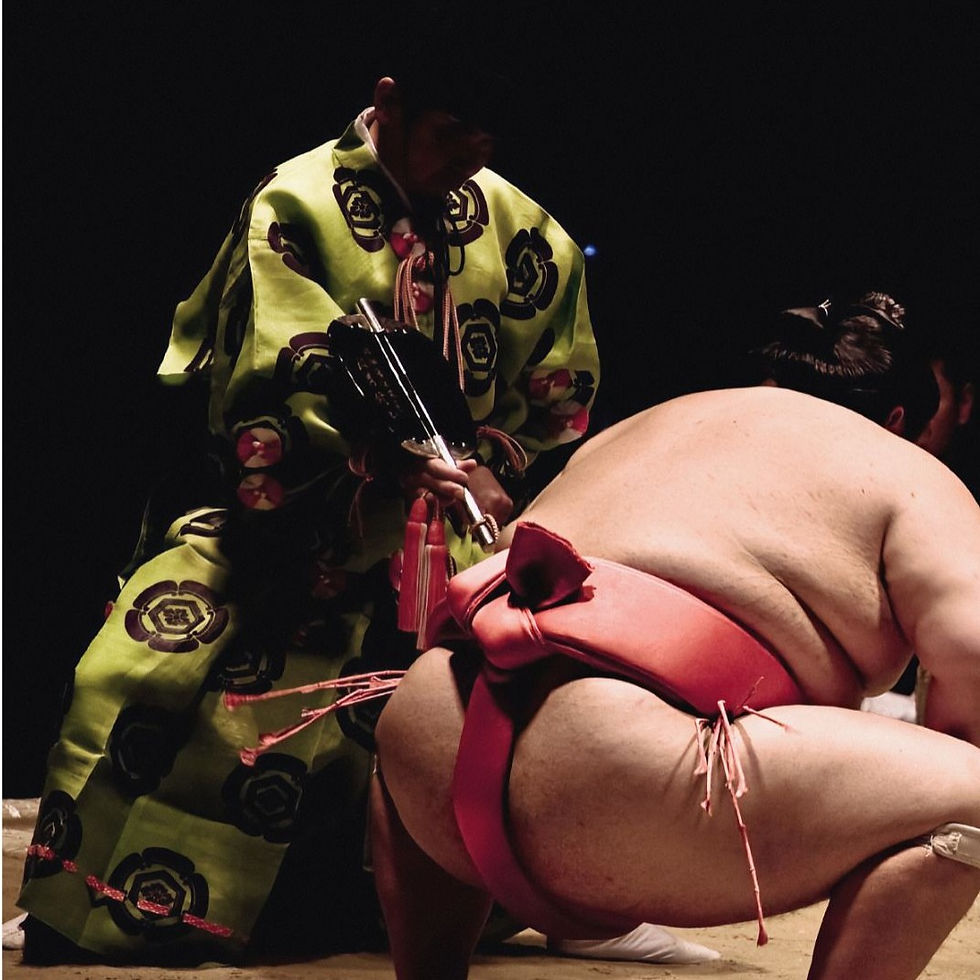
The food follows the season: new rice, chestnuts, persimmons, and hot pots (nabe) that suit the cooler evenings. If you are a sumo fan, try chankonabe, the hearty hot pot that sumo wrestlers eat, for a taste of life in the sumo world. Sake brewing begins as the weather cools, so freshly pressed sake starts to appear on izakaya menus.

Can You Watch Sumo in Tokyo in November?
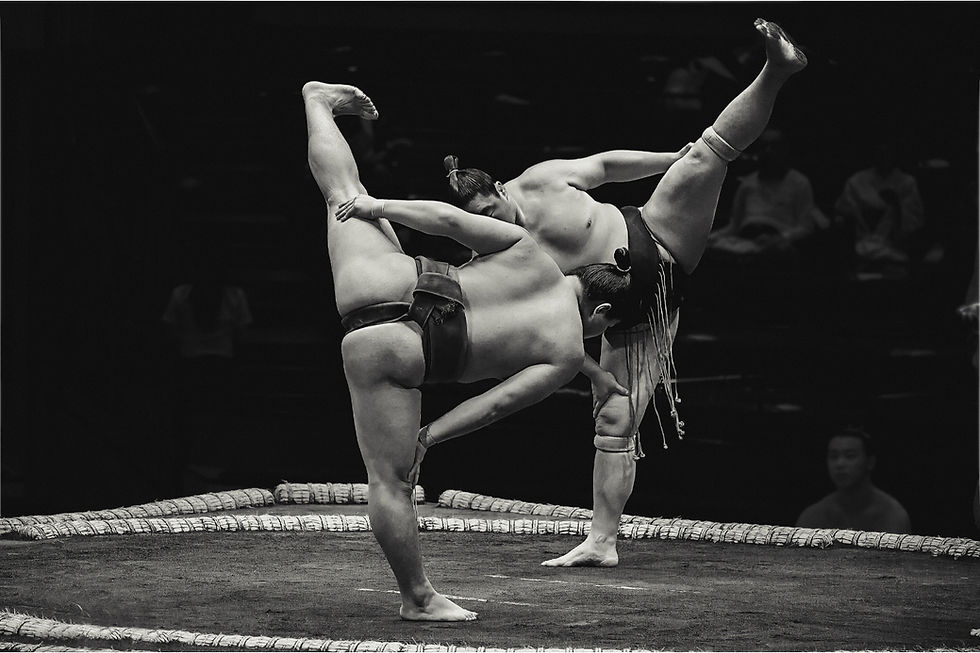
Not a tournament. Tokyo hosts the grand sumo tournaments in January, May and September at the Ryogoku Kokugikan, and the November tournament is held in Fukuoka from November 8 to 22. In 2027, the Tokyo tournaments run January 10–24, May 9–23 and September 12–26. What you can still do in Tokyo is see sumo culture up close.
Arashio Stable lets visitors watch morning practice for free from outside, through full-length windows, from about 7:30 to 9:00 a.m. You cannot watch from inside the stable. There is no practice while the tournament is on in Fukuoka, and the stable has so far announced no practice from November 23 to 29. Practice can also be cancelled at short notice and is never guaranteed, so check the stable's practice calendar before you go.
I would almost rather keep this next tip to myself. Chanko Chiyonofuji, in Sumida Ward between JR Kinshicho and JR Ryogoku stations, occupies the former Kokonoe Stable and has kept its dohyo, the sumo ring, so you can eat chankonabe while looking at it. Kokonoe was the stable of Chiyonofuji, one of sumo's greatest yokozuna, whose 31 championships are the third most in history. The restaurant is run by his family, and his widow is the proprietress (okami). Its chanko is based on the hot pot he passed on to his disciples. Few places in Japan let you eat chankonabe beside a real dohyo. As a huge Chiyonofuji fan, I was deeply moved the first time I ate there, and it is my personal recommendation. Pair it with morning practice at Arashio Stable for a full sumo day, and check the restaurant's current hours and how to reserve before you go.
Want to understand sumo more deeply? Our guide, How to Watch Sumo in Tokyo Like a Japanese Fan, explains the rules, the ranking system and the rituals behind every bout.

In September, we ran a Tokyo Grand Sumo Tournament tour at the Ryogoku Kokugikan with official tickets secured through the Japan Sumo Association, and it was fully booked. The tour paired an official ticket with a chankonabe lunch and a guided walk through Ryogoku. We hope to offer similar tours again in 2027, if we can secure official tickets. Guests on our Priority Waitlist will receive advance notice before reservations open to the general public. Joining does not guarantee a place.
For full details on how to buy official sumo tickets — including sale dates through 2028 — read our complete guide: How to Get Sumo Tickets in Tokyo 2027
Why November Matters in Japanese Culture: Harvest, Rituals and Kagura-zuki
Many of November's traditions sit at the turn from harvest to winter. In an agricultural society, the moment the harvest was in was the moment to give thanks, trade the surplus and prepare for the cold.
Labor Thanksgiving Day (November 23) grew out of Niiname-sai, the ritual in which the emperor offers the year's new rice to the gods.
Tori-no-Ichi, as described above, also developed as an autumn market, and the farm rake became a good-luck charm.
Robiraki marks the start of the cold-season tea, when tea practitioners switch from a portable brazier to the sunken hearth. Tradition links it to a Boar day, since the boar is associated with water and so with protection against fire.
New rice, freshly brewed sake and warming hot-pot dishes all become more prominent as the harvest season gives way to colder weather.
Kagura-zuki is an old poetic name for the eleventh month of Japan's traditional lunar calendar. The name is associated with kagura, the sacred music and dance offered to the kami. Because the old lunar calendar does not align exactly with today's Gregorian calendar, Kagura-zuki generally fell later than modern November.
The same word, kagura, appears in Kagurazaka. No one knows exactly which kagura gave the slope its name. Several traditions survive: kagura played at a festival of Ichigaya Hachiman Shrine, kagura from Wakamiya Hachiman Shrine that could be heard along the slope, and a kagura hall at Akagi Shrine. By the middle of the Edo period, the origin was already unclear.
Kagurazaka in November: A Neighborhood Calendar
Kagurazaka is a hillside neighborhood in Shinjuku with a geisha-district heritage, and November is one of its liveliest months.
October 10 to November 3: Machi Tobi Festa. A neighborhood-run autumn culture festival with 41 programs, from sutra copying and kimono tea gatherings to street performances and exhibitions.
Sunday, November 1: Kagurazaka Art Square. An open-air exhibition in the grounds of Bishamonten Zenkokuji Temple, 10:00–16:00, free, no reservation needed. It is cancelled in rain or strong wind.
Tuesday, November 3: "Drawing on the Slope." From 12:00 to 15:30 on the main street, free. Because it is a national holiday, Kagurazaka-dori is car-free as a pedestrian zone from noon to 7:00 p.m., and paper is laid out along the road so that anyone can draw on it. It has a family-friendly feel. If you want to see both this and Meiji Jingu's yabusame, which starts at around 1:30 p.m., you can head to Kagurazaka afterward, since the pedestrian zone runs until 7:00 p.m. The drawing event itself ends at 3:30 p.m.
October 29 to November 1: Oedo Shinjuku Konya-meguri. Elsewhere in Shinjuku, dyeing workshops along the Kanda and Myoshoji rivers, in Ochiai, Takadanobaba and Waseda, open their doors to visitors until November 1. Konya means a dyer's shop: because indigo dyeing made up most dyed goods in the Edo period, dyers came to be called by that name. Each workshop sets its own dates and offers its own demonstrations or hands-on experiences, and many require reservations, which open from September 22 through a Japanese-language booking site. See our October guide for more.

Sunday and Monday, November 22–23: Dōn to Fukui in Kagurazaka: Echizen & Wakasa Festival (17th edition). Fukui Prefecture presents its specialties and performances along Kagurazaka-dori and in the grounds of Akagi Shrine and Bishamonten Zenkokuji. The festival runs 11:00–17:00 on the 22nd and 10:00–17:00 on the 23rd, a national holiday. The organizers are Fukui Prefecture and the Wakasawan Tourism Federation. On the 23rd the main street is a pedestrian zone from noon to 7:00 p.m., so strolling between the venues is easy.

Why does a Fukui festival come to Kagurazaka? During the Edo period, the Obama Domain of present-day Fukui Prefecture had a residence in what is now Yaraicho, near Yarai Park. Sugita Genpaku, known for Kaitai Shinsho, a landmark Japanese book on Western anatomy, was born there, and a monument marks the site. The festival grew from that link and has continued with the support of local shops.
The festival flyer lists a performance of Wakuri Mibu Kyogen at Akagi Shrine, starting at 11:55 a.m. on Sunday, November 22 and at 10:00 a.m. on Monday, November 23. It is a masked comic drama performed in silence to the sound of a gong and a flute. In the Wakuri district of Obama, it is staged every six years in April in temple grounds, and it is thought to descend from Kyoto's Mibu Kyogen. Because it has no spoken lines, it can be enjoyed without Japanese. Fukui's snow crab season also traditionally opens in early November, so Fukui seafood is at its best around this time.
Saturday and Sunday, November 28–29: Dyers' Thanksgiving. Dyers from the Konya-meguri workshops gather at Bishamonten Zenkokuji Temple, 10:00–16:00, to exhibit Edo komon and Tokyo yuzen and to sell kimono accessories such as collars, pouches, tenugui hand towels and stoles. Limited-edition "Godzilla vs. Shinjuku" goods, made by the Shinjuku dyers' council, are also on sale. This is the same weekend the ginkgo and maples are expected to be at their best, so come early.

Kagurazaka's traditional restaurants take part in the season quietly. Yukimoto, a ryotei (a high-end traditional Japanese restaurant), buys a kumade at the Tori-no-Ichi every year and keeps it at its entrance for the whole year. If you pass a lucky rake at a doorway in Kagurazaka, this is where it comes from.
Traditional Cultural Experiences in Kagurazaka (Things to Do in Tokyo in November)
Enjoy the elegant world of Tokyo’s living geisha culture. Watch refined dance performances while sipping sake in a serene ryotei setting—an unforgettable experience found only in Kagurazaka.

At Yarai Noh Theater and nearby temples, visitors can experience the profound world of traditional Japanese performing arts and the aesthetic of Yūgen—the beauty found in subtlety and silence.

Taste seasonal sweets made from chestnuts, sweet potatoes, or persimmons, paired with matcha. At Baikatei’s annex “Fufumian”, Japan’s top wagashi artisan, Mr. Takeshi Inoue, a certified Tokyo Meister, personally teaches wagashi making.

Meet master artisans one-on-one in tranquil workshops. This “Artistic Autumn” experience reveals the depth and elegance of Japan’s handcraft heritage.

Tokyo in November FAQ
Is November a good time to visit Tokyo?
Yes. Sunshine is common and temperatures are cool rather than cold. In central Tokyo, the leaves turn gold and red toward the end of the month, with ginkgo forecast at its best from around November 26 and maples from around November 28. The three-day weekend of November 21–23 is the busiest for domestic travel, and the weekend of November 28–29, when the leaves are expected to be at their best, is likely to be crowded too. Plan popular spots for early mornings or weekdays.
What should I wear in Tokyo in November?
Layers. Average temperatures fall from about 14°C in early November to about 11°C in late November, and mornings and evenings are much colder than afternoons. A sweater with a jacket or light coat covers most of the month, and a scarf helps in the last ten days.
When is the best time to see autumn leaves in Tokyo in 2026?
Ginkgo trees are forecast to be at their best from around November 26, and maples from around November 28, with good viewing continuing into early December. Forecasts are revised through the season, so check the latest before you go.
Can you watch sumo in Tokyo in November?
Not a grand tournament, because the November tournament is held in Fukuoka. You can still experience sumo culture in Tokyo through chanko dining and, on days when practice is held, by watching a stable's morning practice from outside. Check the stable's calendar first, because there is no practice while the tournament is on. Planning a trip around a Tokyo tournament? In 2027, they run January 10–24, May 9–23 and September 12–26. Read our guide, How to Watch Sumo in Tokyo Like a Japanese Fan.
EDO KAGURA is a boutique destination management company based in Kagurazaka. We design private cultural experiences, from geisha ozashiki and sumo-related tours to wagashi, Noh, zazen and kumihimo, led by carefully selected guides. Our approach is understanding first, experience second: in November, that means explaining why the season looks the way it does, then planning routes that avoid the crowds, especially on the November 21–23 weekend.
Continue the Series: Understanding Japan, Month by Month
This guide is part of an ongoing series for first-time visitors to Japan, built around one idea: understanding a season always makes experiencing it more meaningful.
New monthly guides will be added as the series continues.
About the Author
Shinya Yamada is the founder of EDO KAGURA and has lived in Kagurazaka for over 25 years. Before founding EDO KAGURA, he spent nearly three decades in investment banking and fund management.
How to Access Kagurazaka
The Kagurazaka area is conveniently located within 30 minutes from any major station in Tokyo. This is because Kagurazaka is situated in the heart of Tokyo, at the center of the Yamanote Line. Please come and visit this convenient and charming Kagurazaka.
References
Japan Meteorological Agency — Tokyo Temperature Normals, 1991–2020 (Daily Values)
Japan Meteorological Corporation — 2026 autumn leaves forecast (2nd, October 1)
Oedo Shinjuku Konya-meguri — Shinjuku Dyeing Council (Japanese)
Weathernews — Mt. Takao Autumn Leaves Information 2026 (Japanese)
Weathernews — Lake Kawaguchiko Autumn Leaves Information 2026 (Japanese)


Comments