


Tokyo in January 2027: A First-Time Visitor's Guide to Winter Weather, New Year Traditions & Kagurazaka

January is the month most travelers cross off their list. "Too cold," they think, or "everything will be closed for the New Year."
Both ideas are only half true. January is Tokyo's coldest month, but also one of its sunniest and most stable. And while the first three days of the year are quiet in residential neighborhoods (though packed at major shrines), the rest of the month is when Japan practices its traditions most openly: New Year shrine visits, Coming-of-Age Day kimono, the first sumo tournament of the year, and geisha dressed in their most formal attire.
This guide covers the practical side first: weather, what to wear, dated events, and the New Year closures that catch many travelers off guard. It then explains why Tokyo's January looks the way it does.
The guide is written from Kagurazaka, the historic geisha district in the center of Tokyo, where our founder has lived for more than 25 years and where our team guides travelers every day.
Tokyo in January 2027: Quick Answer & Key Facts
Is January a good time to visit Tokyo? Yes, especially from January 4 onward. Plan around the first three days of the year.
January in Tokyo | |
Average high / low | 9.8°C / 1.2°C (50°F / 34°F) |
Rainfall | About 60 mm, one of the driest months of the year |
Sunshine | About 190 hours, among the sunniest months |
Sunset | From about 4:40 pm (early January) to about 5:05 pm (end of month) |
Snow | Occasional; on average about three days with any snowfall, rarely enough to settle |
Crowds | Very busy at major shrines Jan 1–3 and on trains Jan 2–4. From mid-January, one of the calmest periods of the year |
Biggest caveat | Many small restaurants, shops and museums close around Jan 1–3 (some until Jan 4 or 5) |
Weather figures: Japan Meteorological Agency, climate normals for Tokyo (1991–2020).
The good:
Clear skies and the year's best chance to see Mt. Fuji from the city.
Fewer international visitors after the New Year, and hotels that are often easier to book.
New Year traditions you can only see this month.
The January sumo tournament.
Winter food and freshly pressed new-season sake.
The less good:
Cold mornings and evenings.
Closures and crowds around January 1–3.
If you can choose, mid to late January is the sweet spot for calm streets. If you want to see the New Year traditions themselves, come in the first half of the month, after January 3.

Tokyo Weather in January: Temperature, Sunset & What to Wear
Cold, but remarkably stable
January is the coldest month in Tokyo. Yet it is also one of the most predictable. The same mechanism that keeps December clear is at its strongest now: cold northwesterly winds from the continent drop their moisture as snow on the mountains of Japan's western coast, and arrive on the Pacific side as dry, bright air. That is why Niigata can be buried in snow on the same day Tokyo has a cloudless sky.
Recent years make the point even more clearly. In our analysis of Japan Meteorological Agency data for 2010–2025, January had the lowest average rainfall of the year (about 44 mm) and the highest sunshine rate (65.2%), with an average daily high of 10.3°C (51°F) and low of 2.0°C (36°F), slightly milder than the long-term normal.
The traditional calendar captures this precisely. In 2027, Shōkan ("Lesser Cold") begins on January 5 and Daikan ("Great Cold") on January 20, the last of the 24 seasonal divisions before spring begins on February 4. Late January is, in both the old calendar and modern weather records, the coldest time of the year.
Sunset times in January 2027
Date | Sunset (Tokyo) |
January 5 | 4:41 pm |
January 11 | 4:47 pm |
January 20 | 4:56 pm |
January 31 | about 5:07 pm |
Source: National Astronomical Observatory of Japan.
Days are short but lengthening. Plan outdoor sightseeing for late morning and early afternoon, when the sun is strongest.
What to wear
Dress in layers you can take off rather than relying on one heavy coat. Trains, shops and restaurants are well heated, so you will move between cold streets and warm interiors all day.
A warm coat (a down jacket is ideal)
A sweater or fleece layer underneath
Scarf and gloves, especially for mornings and evenings
Comfortable walking shoes; waterproof boots are not necessary
Lip balm and moisturizer: the same dry air that clears the sky dries your skin
Kairo (disposable heat packs), sold at every convenience store and drugstore. Stick-on types go inside a layer at your lower back or in your pockets
Temples, shrines and traditional buildings are often barely heated, and you may be asked to remove your shoes. Warm socks make a real difference.
Best Things to Do in Tokyo in January
Make a New Year shrine visit (hatsumōde). Meiji Jingu and Senso-ji are the most famous; neighborhood shrines are calmer and just as authentic. For something more local, walk part of the Shinjuku Yamanote Seven Lucky Gods pilgrimage, which starts at Bishamonten in Kagurazaka.
Look for Mt. Fuji from an observation deck. January's dry air gives the best odds of the year. The Tokyo Metropolitan Government Building in Shinjuku is free.
Watch sumo at the January tournament (January 10–24, 2027, Ryogoku Kokugikan), or join our guided sumo tour on January 12.
See Coming-of-Age Day (Monday, January 11), when twenty-year-olds fill the streets in formal kimono.
Shop at the Setagaya Boro-ichi (January 15–16), a street market with roots in 1578.
Drink new-season sake in an izakaya. January is the heart of the sake brewing season.
Try an indoor cultural experience on a cold afternoon: ukiyo-e printing, wagashi, tea ceremony or zazen.
Spend an evening in Kagurazaka, where January is the geisha's busiest and most formal month.

January 2027 Events Calendar
Dates (2027) | Event | Where | Why go |
Jan 1–3 | Hatsumōde (first shrine visit) | Shrines and temples citywide | Japan's largest annual religious gathering |
From Jan 1 | Shinjuku Yamanote Seven Lucky Gods pilgrimage | Seven temples and shrines from Kagurazaka to Shinjuku | A New Year walk collecting the blessings of seven gods of fortune |
Jan 1 | New Year's Day opening of the observation deck | Tokyo Metropolitan Government Building | Special sunrise viewing by lottery has been offered in previous years; check the official 2027 announcement. The deck is normally closed on Jan 2–3 |
Jan 2 | New Year Greeting of the Imperial Family | Imperial Palace | A rare chance to enter the palace grounds ( Times to be announced) |
Jan 2–3 | Hakone Ekiden | Start/finish at Otemachi | Japan's most-watched university relay race |
Jan 6 (Wed), from 10 am | Dezome-shiki (Tokyo Fire Department New Year Review) | Tokyo Rinkai Disaster Prevention Park, Ariake (ceremony seats by advance lottery); free exhibition at Ariake Garden | Edo-style firefighters balancing on bamboo ladders |
Jan 7 | Nanakusa (seven-herb rice porridge) | Homes and restaurants | A light meal to rest the stomach after New Year feasting |
Jan 8 | Dondo-yaki | Torigoe Shrine, Taito | New Year decorations burned in a sacred bonfire |
Jan 10–24 | Grand Sumo January Tournament | Ryogoku Kokugikan | The first of the year's three Tokyo tournaments |
Jan 11 (Mon, holiday) | Coming-of-Age Day | Citywide | Young people in formal kimono and suits |
Jan 11 and Jan 23 | Unveiling of the Bishamonten statue (Hatsutora) | Zenkoku-ji, Kagurazaka | The hidden principal image is shown on the tiger days of January |
Jan 12 | Ome Daruma Market | Ome | Stalls of daruma dolls, a classic New Year market |
Jan 15–16 | Setagaya Boro-ichi | Setagaya | About 700 stalls; a market since 1578 |
Jan 20 | Daikan (Great Cold) begins | — | Start of the coldest stretch of the year |
Dates may change. Please check each organizer's official page before you go.

January 1–3: Why Japan Closes, and How to Plan Around It
The first three days of the year, sanga-nichi, are the heart of the Japanese New Year. Government offices are closed from December 29 to January 3 by law. Private businesses decide for themselves: many follow a similar break, while others open as early as January 2.
Why the closures happen. In traditional belief, the New Year is the moment the toshigami, the deity of the new year, visits each household. The kadomatsu decorations at entrances mark the way for it, and the house is cleaned in advance to receive it. Osechi, the elaborate New Year food, is made before the year begins and packed to keep for several days. Its purpose was practical as well as symbolic: with food prepared in advance, the household could rest and spend the first days with the deity and with family, instead of cooking and working. The empty streets of January 1 are that custom in modern form.
What to expect:
Small, family-run restaurants and shops: Often closed from around December 29 until January 4 or 5.
Department stores and large malls: Usually closed on January 1 and open from January 2 with New Year sales and fukubukuro (lucky bags).
Major shrines and temples: Extremely crowded, especially Meiji Jingu and Senso-ji on January 1–3.
Trains: Heavy return traffic around January 2–4 as people head back to the city. The first workday of 2027 is Monday, January 4.
Shrine food. At major shrines, stalls sell hot amazake (a sweet, non-alcoholic rice drink), grilled mochi and other street food during the New Year. A cup of amazake in the cold is part of the experience.
Ozōni: the New Year soup. The first meal of the year in most Japanese homes is ozōni, a soup with mochi rice cakes. Its name means "mixed and simmered," and its origin follows the same logic as the rest of the New Year: mochi and other foods offered to the toshigami were simmered together and eaten by the family, sharing the deity's food at the start of the year. Every region has its own version. In Tokyo it is typically a clear dashi broth with square, grilled mochi; around Kyoto, round mochi in white miso. A common explanation for Tokyo's square mochi is practical: the huge city of Edo made mochi in large flat sheets and cut them into squares, which was far faster than rolling each piece by hand.
Why the decorations are burned. Around January 7, the end of matsu-no-uchi (the period when pine decorations stand), the kadomatsu and other New Year ornaments come down. Because they served as the dwelling place of the toshigami, they cannot simply be thrown away. Instead, they are brought to shrines and burned in a sacred bonfire called dondo-yaki, whose smoke is said to send the deity back. Torigoe Shrine in Taito holds one of Tokyo's best-known dondo-yaki on January 8.
Our advice: Use January 1–3 for shrine visits, observation decks and the department store sales. Plan restaurants and cultural experiences from January 4 onward.
EDO KAGURA's New Year schedule: Most of our tours and experiences are closed from January 1 to 3. The exceptions are our tea ceremony, washoku cooking and tofu workshops, which can run through the year-end and New Year holidays if one of our guides is available. Our artisans, teachers and venues reopen on different days, so here is when each experience is available again in January 2027:
Experience | Available from |
Monday, January 4 | |
Monday, January 4 | |
Monday, January 4 | |
Monday, January 4 | |
Tuesday, January 5 | |
Tuesday, January 5 | |
Wednesday, January 6 | |
Wednesday, January 6 | |
Wednesday, January 6 | |
Friday, January 15 | |
Available through the year-end and New Year holidays, subject to guide availability |
All tours require booking at least one week in advance.
Coming-of-Age Day: Why Japan Still Celebrates at Twenty
On Monday, January 11, 2027, Tokyo's streets fill with young people in long-sleeved furisode kimono and formal suits. This is Coming-of-Age Day, a national holiday that celebrates the transition into adulthood.
Why January? Until 2000 the holiday was fixed on January 15. That date is Koshōgatsu, the "Little New Year," and in earlier centuries it was a traditional time for genpuku, the ceremony in which a boy took on adult dress and an adult name. Since 2000, the holiday has fallen on the second Monday of January to create a three-day weekend.
Why still twenty, when adulthood is now eighteen? Japan lowered the legal age of adulthood from 20 to 18 in April 2022, yet almost every municipality still holds its ceremony for twenty-year-olds, now often called the "Gathering for Twenty-Year-Olds." The reason is practical. Mid-January is the peak of Japan's university entrance exam season. A ceremony for eighteen-year-olds would fall in the very weeks they are taking the most important exams of their lives. Twenty is also still the legal age for drinking alcohol. So the ritual kept its age even after the law moved. Only a handful of municipalities hold their ceremony at eighteen, such as Iga City in Mie Prefecture, Kunisaki City in Oita Prefecture and Misato Town in Miyazaki Prefecture.
Ceremonies are mostly held on Sunday the 10th or Monday the 11th. You will see the kimono around stations and city halls, and in photos at shrines, throughout the weekend.

Dezome-shiki: Edo's Firefighters on Parade (January 6)
Every January 6, the Tokyo Fire Department opens the year with dezome-shiki, a review of fire engines, rescue demonstrations and, at its heart, ladder-top acrobatics by the Edo Firemanship Preservation Association.
The ladder performance only makes sense once you know why Edo needed it. Edo was one of the largest cities in the world, built almost entirely of wood and packed tightly together, and great fires swept through it again and again. The custom traces back to the period after the Great Meireki Fire of 1657, which destroyed much of the city. There was no water pressure to fight such fires, so Edo's firefighters stopped them by tearing down buildings in the fire's path. The men best suited to this were tobi, construction workers who knew how houses were put together and who were used to working at height. Climbing a ladder to watch the flames and the wind was part of the job. The acrobatics you see today are a display of exactly those skills.
Ceremony seats in 2027 are allocated by advance lottery, but the exhibition at Ariake Garden is free to enter.
The Meireki Fire left another legacy you can see in January: it is the reason sumo is in Ryogoku (see below).
Mt. Fuji and Winter Clarity
January's dry air produces the clearest skies of the year, and with them the best odds of seeing Mt. Fuji, about 100 km away, from central Tokyo. Mornings are usually clearer than afternoons.
The Tokyo Metropolitan Government Building Observation Deck in Shinjuku is free and 202 meters high, and Fuji is visible to the west on clear days. In previous years it has opened on New Year's Day, with special sunrise viewing by lottery (sunrise around 6:50 am) followed by general admission; check the official 2027 announcement before planning around it. The deck is normally closed on January 2 and 3. Tokyo Skytree, Tokyo Tower and Shibuya Sky are paid alternatives.

Sumo in January: The First Tournament of the Year
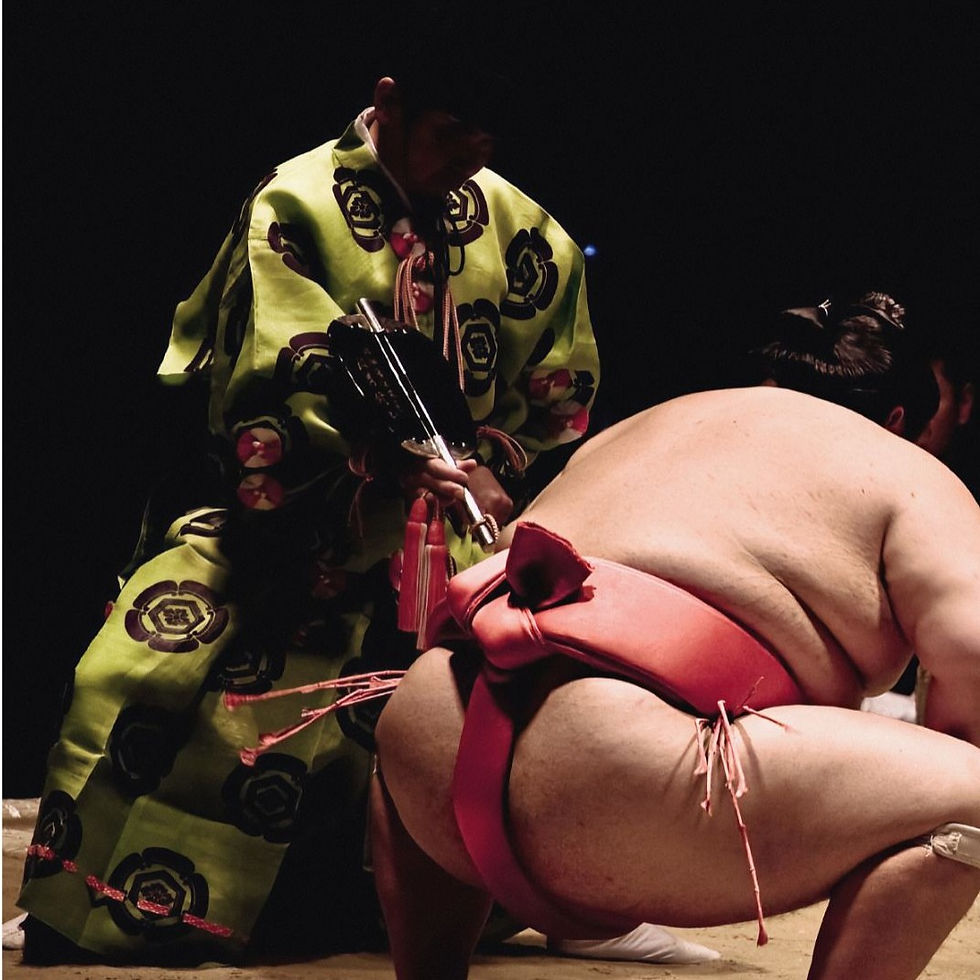
The Grand Sumo January Tournament runs from Sunday, January 10 to Sunday, January 24, 2027 at Ryogoku Kokugikan. It is the first of six annual tournaments and one of three held in Tokyo. If your trip falls in mid-January, it is one of the best things you can do in the city.
Sumo is more than a sport. The ring (dohyō) is treated as sacred ground, and before each bout wrestlers throw salt to purify it, a practice rooted in Shinto ideas of purity.
Why sumo is in Ryogoku. The answer goes back to the Great Meireki Fire of 1657. So many died that countless victims could not be identified or had no one to claim them. By order of the shogunate, Ekō-in temple was founded in Ryogoku to bury them with care and pray for their souls. In Edo, temples and shrines raised money for building and repairs by holding kanjin-zumo, fundraising sumo tournaments licensed by the shogunate, the forerunner of today's professional sumo. Ekō-in, with its large grounds, became their usual venue from the 1790s and their fixed home in 1833. In 1909 the first Kokugikan, Japan's national sumo hall, was built on part of the temple's grounds. Today's Kokugikan stands a short walk away, and Ekō-in's grounds still hold the Chikarazuka, a memorial to departed sumo wrestlers.
General ticket sales for the January tournament open on December 5, 2026, and the best seats sell out quickly. A note for anyone reading older guides: the cheap unreserved seats once sold at the Kokugikan each morning no longer exist, and every seat is now reserved. Same-day tickets are sold at the venue only for days that have not sold out, so if sumo is a must on your trip, buy in advance or join a tour with secured tickets. Ryogoku is also the home of chanko-nabe, the hotpot sumo wrestlers eat in their stables; many chanko restaurants nearby are run by former wrestlers, and a bowl after the bouts is the classic way to end a sumo day in winter. Our guides explain how to get tickets and how to watch a full day of sumo, from the lower divisions in the morning to the top division ring entrance in the afternoon: [How to Get Sumo Tickets in Tokyo 2027 — Tournament Schedule & Sales Dates]).
Join our sumo tour on Tuesday, January 12, 2027. If you would rather not navigate tickets and the day on your own, our Grand Sumo tour takes you to the January tournament with a guide who explains the rituals, the ranks and the rules as the bouts unfold, so you understand what you are watching rather than just seeing it.
Kan: Why January Is the Season of Sake
The thirty days from Shōkan to the start of spring are called kan, the cold season. Many Japanese crafts are timed to it, and the reason is microbial: at these temperatures, unwanted bacteria barely grow, so the "water of the cold season" was believed to keep well. Sake breweries, miso and soy sauce makers, and producers of kanten (agar) all did their most important work in these weeks. Even kangeiko, winter training in martial arts, belongs to the same seasonal logic.
For sake, the cold allows a slow, clean fermentation. The result is that January brings shiboritate, freshly pressed new-season sake, to izakaya across Tokyo. If you enjoy sake, this is the month to ask for it.
The food follows the season too. January is the month of nabe (hotpot) and oden, dishes cooked at the table or kept simmering at the counter, where one pot warms everyone around it. Winter is also when many fish are at their richest: yellowtail (kan-buri, "cold-season yellowtail") is named for this very season. Our Kagurazaka izakaya tour takes you into the kind of small local places where seasonal sake appears on the board.

Why January Is One of Tokyo's Quieter Months
According to the Japan Tourism Agency’s Overnight Travel Statistics for 2023–2025, foreign guest-nights in Tokyo in January averaged about 81% of the monthly average compared with about 115% in December. (Monthly average for each year = 100%)
The reason is a gap between two peaks. December brings year-end holiday travel from around the world, and in 2027 the Lunar New Year, the biggest travel holiday across East Asia, falls on February 6. Mid and late January sit between them. Domestically, Japanese travelers have just spent their New Year break and are back at work.
For you, that means calmer attractions and easier restaurant bookings, especially from mid-January. Hotel rates depend on the property and on events in the city, but with less demand, availability is usually better than in peak months.
Kagurazaka in January: The Geisha's Most Formal Month
Kagurazaka is not a tourist district. It is a working neighborhood in central Tokyo where geisha culture continues as part of daily life. In January, the change is subtle but unmistakable.
Why January is the geisha's busiest month
Visitors often assume December, the season of year-end parties, is the geisha's busiest time. From inside the kagai (geisha district), we can tell you it is January. Geisha are considered bearers of good fortune, and companies and long-time patrons want them at their very first banquets of the new year, the shinnenkai. Starting the year with a geisha at the table is starting it with good luck.
If you hope to experience a geisha ozashiki evening in Kagurazaka in January (available from January 5), contact us as early as possible. Evenings are harder to secure than at any other time of year.
New Year attire: white makeup and black kimono
Unlike Kyoto's maiko and geiko, Tokyo geisha do not normally wear white makeup. In Kagurazaka, the exception is the New Year. In 2027, from January 4 until January 21, the geisha appear in their most formal attire:
White makeup, worn only by the tachikata (dancers); the jikata, who sing and play the shamisen, do not wear it
Black hikizuri (trailing) kimono with family crests, the highest level of formal dress
The New Year is the most important ceremonial occasion of the Japanese year, so it calls for the most formal dress. This appearance is strictly seasonal, and many travelers who visit Kagurazaka in other months never see it.
Rice ears in the hair: why rice means wealth
During the same period, geisha wear hairpins decorated with ears of rice. The symbolism is older and more literal than it first appears. In Edo-period Japan, wealth was measured in rice. A lord's domain was ranked by its rice yield in koku, and samurai stipends were paid in rice. Rice was not a metaphor for prosperity; it was prosperity.
That is why, in Kagurazaka and other geisha districts, it is still said that receiving a few grains from a geisha's hairpin and keeping them in your wallet brings good fortune for the year. I have received rice grains from a Kagurazaka geisha myself, and carried them in my wallet for the whole year.
A common design pairs the rice ears with a dove. "Bird" (tori) and "rice" (kome) together read as torikomu, "to bring in," as in bringing in good fortune. This style is said to have originated at Yoshinoya, a traditional hair-ornament shop in Akasaka, another of Tokyo's historic geisha districts.

Bishamonten: the temple that made Kagurazaka
Halfway up Kagurazaka's main street stands Zenkoku-ji, home of the "Bishamonten of Kagurazaka," one of the three great Bishamonten temples of Edo. The temple moved here in 1793, and Kagurazaka grew as its monzenmachi, the town in front of a temple's gate: pilgrims came for Bishamonten, and shops, restaurants and entertainment followed them. By the late Meiji and Taisho eras the street was known as the "Ginza of the Yamanote." Natsume Soseki even mentions the temple's fair in Botchan.
Bishamonten is said to have descended in the year, month, day and hour of the tiger. That is why stone tigers, not the usual lion-dogs, guard the main hall, and why the temple shows its hidden principal image to the public on the tiger days of January, May and September. In January 2027 the first tiger day falls on January 11, the same day as Coming-of-Age Day.
Zenkoku-ji is also the starting point of the Shinjuku Yamanote Seven Lucky Gods pilgrimage, a walking route linking seven temples and shrines from Kagurazaka to Shinjuku, each dedicated to one of the seven gods of good fortune. Visiting all seven at the start of the year is a New Year custom that spread in Edo, and it remains a pleasant way to see the quiet residential side of central Tokyo.

A neighborhood still in New Year mode
In the first half of January, many of Kagurazaka's houses, ryōtei and small izakaya keep their New Year decorations at the entrance. In a city where most people live and work in tall buildings, it is one of the few places in Tokyo where you can still see the New Year on the doorsteps of real homes and shops. Our Kagurazaka walking tour explains what you are seeing.
Looking Ahead: Setsubun, the Old New Year's Eve (February 3)
If your trip runs into early February, January ends with one more New Year. In the traditional calendar, spring, and with it the year, began at Risshun, which falls on February 4 in 2027. The day before, Setsubun, was the old New Year's Eve, a night to drive out the misfortune of the past year before the new one began. That is why beans are thrown to chase away demons on Setsubun.
In Kagurazaka, the season brings Daikagura, a traditional performance of lion dances and acrobatics that makes the rounds of the neighborhood around Setsubun. Historically, Daikagura made its rounds only in Kagurazaka; its New Year appearances in Asakusa in early January are a relatively recent development.
The lion dance drives away misfortune and illness. When the lion "bites" your head, it is said to devour bad spirits. It is customary to offer a small gift of money in the lion's mouth, around 1,000 yen, ideally wrapped in a small decorative envelope called a pochi-bukuro. In Kagurazaka, people buy them at Soumaya, the neighborhood's oldest shop, founded as a washi paper maker roughly 400 years ago.
The umbrella acrobatics are not random tricks. Each object spun on the umbrella carries a wish: the umbrella for expansion and prosperity, the ball for harmony, the square measuring box (masu) for increasing success, and the metal ring for money.
Our Tokyo in February guide covers Setsubun in more detail.


Indoor Cultural Experiences for Winter Days
On a cold afternoon, a hands-on cultural experience is one of the most rewarding ways to spend time in Tokyo. Reopening dates differ by experience; see our New Year schedule above.
Ukiyo-e woodblock printing: Print your own image with the layered technique used for Hiroshige's and Hokusai's prints.
Wagashi workshop: Learn from a Tokyo Meister confectioner. Available from January 15, when the designs turn toward late winter and the coming spring.
Tea ceremony: January is the season of hatsugama, the first tea gathering of the year. Available even during the New Year holidays, subject to guide availability; the seasonal sweets served may differ over the holidays.
Kumihimo braiding: Braid silk cord with a long-established kumihimo house.
Day Trips from Tokyo in January
Lake Kawaguchiko: Close-up views of Mt. Fuji under its deepest snow.
Hakone: Hot springs and mountain views. Avoid January 2–3, when the Hakone Ekiden closes roads.
Kamakura: Temples and the Great Buddha; very crowded for New Year visits on January 1–3, quiet afterward.
Nikko: Shrines in snow. Much colder than Tokyo.
Avoid long-distance travel on January 2–4, when return traffic peaks.
Frequently Asked Questions
How cold is Tokyo in January? Average highs are around 10°C (50°F) and lows around 1°C (34°F). Sunny afternoons can feel pleasant; mornings and evenings are cold.
Does it snow in Tokyo in January? Occasionally. Tokyo averages about three days with any observed snowfall in January, and most of it melts on landing. Snow that settles enough to disrupt travel happens only in some years.
What should I wear in Tokyo in January? A warm coat over easy-to-remove layers, plus a scarf and gloves. Waterproof boots are not necessary.
Is everything closed on New Year's Day? No. Shrines, temples, convenience stores and many large attractions are open. But many small restaurants, shops and museums close around January 1–3, and some until January 4 or 5. Department stores usually reopen on January 2.
Is outdoor sightseeing comfortable in mid-January? Yes, in the daytime. Clear, windless afternoons in the sun often feel milder than the numbers suggest, while the shade and the hours after sunset feel much colder. Plan walks for late morning to mid-afternoon, and keep evenings for indoor experiences, dinner and izakaya.
Are winter illuminations still on in January? Most Christmas illuminations end on December 25, but some continue. The Marunouchi Illumination along Naka-dori runs until February 14, 2027, and Tokyo Dome City's winter illumination usually continues into February (Check the official schedule.).
When does Tokyo get back to normal after New Year? From Monday, January 4, 2027, the first workday of the year. By the second week of January, almost everything is open.
Can I see geisha in January? Geisha in Kagurazaka are not a street attraction; they perform at private banquets (ozashiki) that require advance arrangement. January is a particularly special time for a private geisha evening, because from January 4 until January 21, 2027, they appear in formal black kimono, with the dancers in white makeup. Our ozashiki evenings are available from January 5. It is also their busiest month, so contact us as early as possible.
Is January a good time to visit Japan? Yes, particularly if you prefer culture to crowds. Clear skies, calmer streets after the holidays, sumo, and traditions you can only see at the New Year make it one of the most rewarding months.
Continue the Series: Understanding Japan, Month by Month
This guide is part of an ongoing series for first-time visitors to Japan, built around one idea: understanding a season always makes experiencing it more meaningful.
New monthly guides will be added as the series continues.
About the Author
Shinya Yamada is the founder and Representative Director of EDO KAGURA, a cultural experience company whose work centers on Kagurazaka, Tokyo, a neighborhood he has called home for over 25 years. Deeply embedded in Kagurazaka's hanamachi (geisha district) community, he maintains direct relationships with its geisha, ryotei owners and traditional artisans, who often turn to him for guidance on welcoming international guests.
How to Access Kagurazaka
Kagurazaka is a historic neighborhood in central Tokyo, inside the Yamanote Line loop, and easy to reach by train or subway.
Kagurazaka Station: Tokyo Metro Tozai Line
Ushigome-kagurazaka Station: Toei Oedo Line
Iidabashi Station: JR Chuo-Sobu Line, plus several subway lines
From these stations, you can explore Kagurazaka's shopping street, narrow stone-paved alleys, temples and geisha district on foot. For travelers who want to discover the stories behind these streets, EDO KAGURA offers guided cultural experiences led by people with deep local knowledge.


Comments