%20(600%20x%20120%20px)%20%E8%83%8C%E6%99%AF%E9%80%8F%E9%81%8E.png)


How to Hire a Tour Guide in Japan: What Most Travelers Overlook When Choosing the Best Private Guide
- Shinya Yamada
- 6 days ago
- 17 min read
Updated: 3 days ago

Japan has 26,848 licensed tour guides — yet the license itself doesn't guarantee the one thing travelers say they want most. Based on a Japan Tourism Agency survey of nearly 1,900 travelers, here's what actually separates a good guide from a great one, and what to ask before you book.
Table of Contents
Introduction
When planning a trip to Japan, most travelers looking for a private guide aren't simply trying to "find a guide."
What they're really looking for is a good guide — someone who is right for them, not just anyone who can show them around.
For travelers who want to make the most of their limited time, deepen their understanding of Japan, and come home with memories that last a lifetime, choosing the right guide can shape the quality of the entire trip.
A private guide is someone you spend anywhere from a few hours to a full day — sometimes several days — with. They don't just take you from place to place. They shape what you see, what you learn, who you meet, and ultimately, how you remember Japan.
Search online for a private guide in Japan, and you'll find an overwhelming amount of information: credentials, reviews, pricing, profiles, languages spoken. All of this matters, of course. But is it enough to actually choose a good guide?
As of April 2023, there are 26,848 registered National Government Licensed Guide Interpreters across Japan — including 8,871 in Tokyo alone. With this many licensed guides to choose from, and even more unlicensed ones, how do you actually find the right one?
In this article, we share our own perspective — informed by a survey conducted by Japan's Tourism Agency among foreign travelers, and by our own experience hiring, training, and working with guides who lead traditional cultural experiences in Tokyo — on what travelers should really be checking for when they hire a tour guide in Japan.

1. Most Travelers Choose a Guide Based Only on What They Can See
When searching for a private guide, most travelers compare the following:
Star ratings and number of reviews
Whether the guide holds a national qualification
Guide fees
Self-introduction text or videos
Languages spoken
Sample itineraries offered
Available dates
These are all useful criteria for narrowing down candidates.
But a high average review score doesn't guarantee that a guide will engage your particular curiosity. A national qualification doesn't guarantee that a guide can speak in depth about the specific things you want to experience — geisha culture, Edo-period food culture, temples, traditional crafts. And a higher price doesn't necessarily mean greater knowledge or a better personality.
What makes choosing a guide difficult is that the qualities travelers most want to confirm are exactly the ones that are hardest to see on a booking page.
So what do foreign travelers actually want from a guide?

2. What Foreign Travelers Really Want in a Good Guide
A survey published in May 2024 by Japan's Tourism Agency, titled "Survey on the Needs Required of Guide Personnel," asked foreign travelers what knowledge they want a guide to have. The following items ranked highest among those who answered "very important":
The origins and background of cultural experiences: 69%
The historical background of historical experiences: 67%
Tourism resources at the destination: 52%
Food and dining: 51%
Guidance on nature experiences: 48%
Including those who answered "somewhat important," the figures for cultural background and historical background rise to 90% and 89% respectively. In a separate question asked only of the 330 respondents who had actually used a guide, "historical sites and landmarks (temples, castle ruins, historic sites, etc.)" was by far the top answer for where guides were used, at 77.6%, followed by cultural facilities (museums, galleries, etc.) at 32.4%.
Consider the kind of information a guide might provide:
"This temple was built in 1629." "This building is 333 meters tall." "This dish is called sukiyaki."
This kind of information can be found on a smartphone in a matter of seconds. In fact, the same survey found that the number one reason travelers gave for not using a guide was "I could get enough travel information online" (32.0%) — far ahead of "it didn't fit my budget" (9.5%).
What this tells us is that travelers are not looking for guides who simply recite facts. They are looking for interpretation rather than information.
Taken together, this suggests that what travelers really want from a guide is something that's hard to find through a simple search: the why and the how that lie beyond the facts.
Why did this culture emerge in this particular place?
Why has this custom survived into the present day?
What values did people hold at the time?
How does what's in front of us connect to the daily life of Japanese people today?
In other words, not what, but why and how.
(The Tourism Agency's survey was conducted from March 4 to 11, 2024, at Haneda Airport, Kansai Airport, Kyoto Station, and Sensoji Temple, among 1,897 foreign visitors to Japan.)

3. Personality Matters as Much as Knowledge
A guide needs deep knowledge of history and culture. But knowledge alone doesn't make a good guide.
The same Tourism Agency survey asked what attitude travelers want from a guide. The top answers for "very important" were:
A friendly manner: 78%
Being easy to understand: 75%
Being approachable: 74%
Handling emergencies and disasters appropriately: 72%
Adapting flexibly to situations: 63%
Handling problems well: 63%
Including "somewhat important," a friendly manner reaches 94%, and both being easy to understand and being approachable exceed 90%.
This may seem obvious. No matter how knowledgeable a guide is, spending a day with someone who lectures without pause, who's hard to ask questions to, or who doesn't notice how you're reacting, is exhausting.
A good guide doesn't display knowledge — they share it. They watch a traveler's expression as they speak. They pick up on the interest behind a question. They keep quiet on topics that don't land and go deeper on the ones that do. They adjust their words and the depth of their explanations for a child, an elderly traveler, a first-time visitor to Japan, or someone who has studied Japanese culture for decades.
A guide must be a knowledgeable expert in history and culture, and at the same time, someone a traveler genuinely enjoys spending the day with.

4. What Japan's "National Government Licensed Guide Interpreter" Credential Actually Guarantees
Japan has a national qualification called the National Government Licensed Guide Interpreter (Zenkoku Tsuyaku Annaishi), which we'll refer to below simply as a "Licensed Guide Interpreter." To hold this license, a person must pass an exam covering foreign language ability along with Japan's geography, history, culture, and tourism practices nationwide, and register with a prefectural government. The Tourism Agency describes license holders as people with advanced foreign language skills and broad knowledge of tourism across Japan.
This is one useful signal when choosing a guide.
However, following a 2018 legal reform, people without this license — whether the national qualification or the regional equivalent — are now legally permitted to provide paid tour guiding in a foreign language. The current system no longer grants licensed guides exclusive rights to the business of guiding; it only protects the exclusive use of the title itself.
And holding this license doesn't mean a guide has deep expertise in every subject.
What this qualification confirms is broad, foundational knowledge for guiding across the whole of Japan. In our view, it is particularly valuable for guides who accompany travelers throughout a multi-city journey across Japan. For travelers looking for a single guide throughout their trip, a Licensed Guide Interpreter is a strong candidate.
On the other hand, the ability to speak narrowly and deeply about one region or one tradition — local cuisine, woodblock printing, geisha culture, cord-braiding (kumihimo), dyeing, temple history — is a different kind of expertise, separate from the license itself.
At EDO KAGURA, we have guides who hold this national license and guides who don't. In our own experience, whether a guide holds the license doesn't significantly change how travelers rate them.
The license is one useful reference point when choosing a guide. But holding it doesn't automatically make someone a good guide — and not holding it doesn't mean a guide lacks deep expertise. We have guides without the license who have earned excellent reviews for their deep knowledge of a specific region or tradition.

5. How to Hire a Tour Guide in Japan: Questions to Ask Before You Book
So how can travelers tell whether a guide is really right for them?
Beyond the star rating, we recommend looking closely at a guide's profile, the full text of reviews, and any pre-tour email exchange, and checking the following points as you think about how to hire a tour guide in Japan.
Can they explain the "why," not just the facts?
Can they go beyond a date or a proper noun and explain why a tradition emerged, and its social background? You might ask something like:
Can you explain not only what happened, but why it happened?
What is their actual area of expertise?
"Knowledgeable about Japanese culture" is too broad a claim on its own. Check whether they have specific, demonstrated experience in the subject you care about — food culture, religion, architecture, traditional crafts, geisha culture, sumo, and so on. Keep in mind that "having an interest in" something and "being able to explain it accurately and in depth to travelers" are not the same thing. A guide's profile listing "kimono" or "temple visits" as an interest doesn't, by itself, guarantee genuine expertise in that area.
Where did they learn what they know?
Did they learn only from books and the internet, or have they learned directly from the people who carry a tradition forward — artisans, cooks, monks, geisha? Asking:
Where did you learn about this tradition?
Asking this question can be a useful way to gauge the quality of a guide's knowledge.
Are they still learning?
Culture and history aren't fixed like museum exhibits. Check whether a guide is continuing to engage with people on the ground and updating their own knowledge.
Can they adapt to your interests?
A good private tour isn't a fixed script delivered the same way to everyone. Do you want to go deep into history, connect with local people, take photos, or walk at a slower pace? The right guide listens to your preferences beforehand and adjusts on the day based on how you respond.
Are they easy to talk to?
The tone of a pre-tour email, the specificity of their answers, and how they engage with your questions all say something about who they are. When reading reviews, look past a simple "it was fun" for more specific details:
They answered questions thoughtfully
They were kind to children or older travelers
They adapted flexibly to the day's circumstances
The traveler's view of Japan changed
Do they have real relationships with the people who carry the culture forward?
Being a "local guide" isn't just about living in the area. What matters is whether the guide is trusted by local people, has an ongoing relationship with those who carry a tradition forward, and can bring their voice to travelers. A guide who exchanges a warm greeting with a local shopkeeper mid-tour is showing you what a real local guide looks like — and walking through a neighborhood with a guide like that is what gives travelers the sense of truly belonging there, if only for an afternoon.
6. We Choose Guides for Character First
The Tourism Agency's survey showed that travelers place as much weight on a friendly manner, clarity of speech, and approachability as they do on cultural and historical knowledge.
At EDO KAGURA, character is one of the most important criteria in how we hire guides.
Our hiring process includes the following steps:
Application and resume review
Aptitude and personality testing
A one-to-two-hour interview
A test of traditional cultural knowledge
A walking training session through Kagurazaka, led personally by our founder
A walking test, in which the applicant leads the tour themselves
Hiring, following successful completion of both the knowledge test and the walking test
Ongoing training in the field and in the office after hiring
This process takes two to three months. We believe that becoming a good guide cannot be rushed. We use personality testing and lengthy interviews because language skill and knowledge alone don't reveal everything. Through this process, we look not only at knowledge and guiding technique, but at a person's willingness to keep learning, their sincerity, and how they respond to feedback.
Can they listen honestly to someone else?
Do they prioritize the traveler's enjoyment over showing off their own knowledge?
Can they say "I don't know" when they don't know?
Do they show respect for the people who carry a tradition forward?
Can they keep learning as part of a team?
Knowledge can be built through training and experience. But it's very difficult to turn someone who lacks respect for travelers and for the people who preserve a culture into a good guide through knowledge alone.
We're not trying to train the person who can talk the most. We're trying to train the person a traveler feels most comfortable talking to.
What I repeatedly tell our guides is this: don't just talk at people — draw questions out of them. When a traveler starts asking questions, it means their curiosity has deepened. Answering those questions sincerely is what leads to a genuinely satisfying experience.
Many of our guests, especially those seeking deeper cultural experiences, ask a great many questions. And it's in those questions — not in memorized dates or names — that a guide's real understanding of cultural and historical background is tested.

7. A Guide's Knowledge Is Never "Finished"
Knowledge of traditional culture doesn't end once a test is passed. Our guides at EDO KAGURA continue learning every day, through conversations with geisha, artisans, monks, and the people who keep traditional culture alive.
The work itself becomes training, and that training raises the quality of the next tour:
Guiding an experience
→ Talking with the people who carry the culture
→ Learning new background and perspectives
→ Sharing it with other guides
→ Passing it on to the next traveler
This cycle is what deepens our guides' knowledge over time.
Our founder participates in traditional cultural experiences himself, whenever possible — not merely to check on quality, but to keep talking with geisha, artisans, and monks, and to keep learning himself.
Books and the internet are essential for building a foundation of knowledge. But only by talking directly with the people still carrying a tradition forward can you learn why they continue this work, what changes they've noticed, and what they consider most important. That firsthand information is what makes the stories we tell travelers feel alive.
Our founder himself does not hold the Licensed Guide Interpreter qualification. Nevertheless, at the request of the Tokyo Convention & Visitors Bureau, he serves as an instructor in training sessions for professional guides — including licensed Guide Interpreters themselves.
This isn't a rejection of the license. It simply reflects the fact that the ability to guide broadly across Japan and the ability to interpret one region or tradition deeply are two different kinds of expertise. In fact, many licensed guides voluntarily attend these training sessions because they want to deepen their own understanding of traditional culture even after earning their qualification. Choosing to attend this kind of training on one's own initiative is itself a meaningful sign of a guide's eagerness to learn. Even after earning a license, how a guide goes about learning directly from the people who carry a tradition forward matters greatly to how deep their expertise can become.

8. This Is the Kind of Conversation We Have on Our Tours
Simply writing "our guides are knowledgeable" doesn't convey what value that knowledge actually brings to a traveler. So here's an example of the kind of conversation we have during a tour.
Why does Japanese food taste so good, no matter what you eat?
There's no single answer to this question. Fresh, abundant ingredients, the craftsmanship of Japanese chefs, a strong sense of the seasons, fermentation techniques, and regional food cultures all play a role.
But we also look at Edo-period publishing culture.
In 1782, a book called Tofu Hyakuchin — literally, "a hundred rare tofu recipes" — was published. It became a huge hit. A sequel followed the next year, and afterward, similar recipe books themed around other ingredients — eggs, sea bream, and more — appeared one after another under the same "hyakuchin" format.
From there, the conversation opens up into several directions:
The idea of drawing dozens of different dishes out of a single ingredient
The possibility that specialized culinary knowledge, once limited to professionals, could now reach a much wider readership through publishing
How woodblock printing made it possible to mass-produce and cheaply reproduce this information
The fact that there was a population literate enough to read these books
The possibility that culinary knowledge spread not only among professional cooks, but into ordinary households
We're not claiming that Tofu Hyakuchin alone created Japan's food culture. But we do think that a culture of putting culinary ideas into words, printing them, and sharing them was one of the factors that helped Japanese food culture flourish.
This story connects what we've learned from tofu makers and geisha about food culture with what we've learned from a woodblock print workshop about Edo-period printing techniques. Rather than memorizing a single answer, we bring together knowledge from different cultural sources and think it through together with our travelers.
Why are Japan's streets so clean?
This isn't fully explained by simply saying that Japanese people are fond of cleanliness. We think through several layers of background together with travelers:
The Shinto idea of purity and the avoidance of ritual impurity
The weeding and water management required for rice paddy farming
The public health measures developed in Edo as one of the most densely populated cities in the world, including the spread of public bathhouses and systems for recycling human waste
Habits of consideration for others within a community
When you draw a single line connecting religion, agriculture, urban history, and daily life, a traveler's simple impression — "Japan is clean" — becomes a doorway into understanding Japanese society more broadly. We can't claim that these factors directly and solely produced the cleanliness of today's streets. But we do think that ideas of purity, the recycling of resources, and habits formed within communities offer a meaningful way to think about Japanese attitudes toward cleanliness.
This is how we see the role of a guide: not answering a question in a single sentence and moving on, but reading the culture behind the scenery together with the traveler.
This is the difference between explaining a fact and revealing a culture.

9. A Good Guide Turns Facts Into a Story
In 2025, Japan's Tourism Agency revised its training text for guides—intended not only for Licensed Guide Interpreters but for guides more broadly—adding new chapters on communicating effectively with travelers and serving luxury travelers.
That same text explains that a guide's role goes beyond presenting facts: guides need to make a traveler's experience memorable, and storytelling is an important way to do that.
But storytelling doesn't mean dramatizing history to make it more entertaining. It doesn't mean bending the facts, and it doesn't mean reciting a script.
It means finding the relationships between different facts and presenting them as a single, coherent narrative that a traveler can follow.
A date or a person's name is just a point on its own. Showing why something happened, and how it connects to the present, turns that point into a line. And when that line connects to a traveler's own interests or experiences, information becomes a story that stays with them.

Here is some recent feedback from guests about our guides.
On knowledge of history and culture:
"Akiko gave us an amazing personal tour of classic Tokyo neighborhoods, woven through with history and culture. She also went out of her way to help us navigate the subway and discover great local shopping. It was a fantastic day — we highly recommend Akiko!"
On knowledge combined with warmth:
"Mayumi was awesome! Extremely knowledgeable and personable with excellent language skills."
On being a highlight of the trip:
"This experience will be one of the highlights of our whole trip!!"
"This was the best tour we have been on in Tokyo!"

11. Choosing a Guide Means Choosing the Memories You'll Keep
Tokyo has no shortage of private guides. Some hold the Licensed Guide Interpreter qualification; others have built independent expertise in a specific region or field. Tour companies, matching platforms, individual guides, volunteer guides — there are many different ways to find one.
What matters is not choosing based on titles or star ratings alone. Consider checking for the following:
Can they explain the background of a culture or a historical event, not just the facts?
Where does their knowledge come from?
Are they still learning?
Are they approachable and friendly?
Can they adapt to your interests and pace?
Do they have a genuine relationship with the people and traditions of the region?
What travelers are looking for isn't just someone who knows the streets of Tokyo. They're looking for someone who changes the way they see Japan.
And choosing a good guide isn't simply choosing a companion for a day. It's choosing what story you'll encounter on your trip, how deeply you'll understand Japanese culture and history, and what version of Japan you'll carry with you afterward.
What does a good guide look like to you? We hope you find a wonderful one, and that your trip to Japan becomes something you'll never forget.

12. Where to Find a Licensed Tour Guide in Japan
For travelers who prefer to arrange a Licensed Guide Interpreter through an official source, the Japan National Tourism Organization (JNTO) provides information on how to book one and maintains links to guide associations and booking services on its official website.
These resources can be a useful starting point, particularly for travelers seeking a guide who can accompany them across multiple regions of Japan.
However, as discussed throughout this article, a national license and nationwide guiding experience are only two of the many factors to consider when choosing a good guide. If your interests are focused on a particular city, neighborhood, or aspect of Japanese culture, it may also be worth looking for guides or companies that specialize in those areas.
13. EDO KAGURA's Private Tours and Traditional Cultural Experiences
If you're looking for a guide who specializes in Tokyo's history, traditional culture, and local communities, we'd be delighted to help. If you already have an itinerary in mind and are looking for a knowledgeable private guide in Tokyo rather than a fixed tour, we're happy to talk.
Among Japan's registered guide interpreters, 71.9% speak English, while only 4.2% speak French, 3.6% speak Spanish, and 2.4% speak German. EDO KAGURA has guides in English, French, German, and Spanish. Depending on the subject, preferred language, date, and guide availability, we may also be able to arrange a private guide separately from our listed tours.
Please contact us to discuss your plans.
At EDO KAGURA, we hire and train our guides based on everything described in this article. Our tours aren't simply about visiting sightseeing spots. We aim to give travelers an experience in which understanding the background of a culture or a piece of history changes the way they see the place or tradition in front of them.
A series of private tours that use Kagurazaka as a starting point, connecting it with another place, era, or theme across Tokyo.
Tokyo 400 Years in One Day — Visit Zojoji Temple, Tokyo Tower, teamLab Borderless, and Kagurazaka, tracing Tokyo's story from the Edo period to the present day as a single narrative.
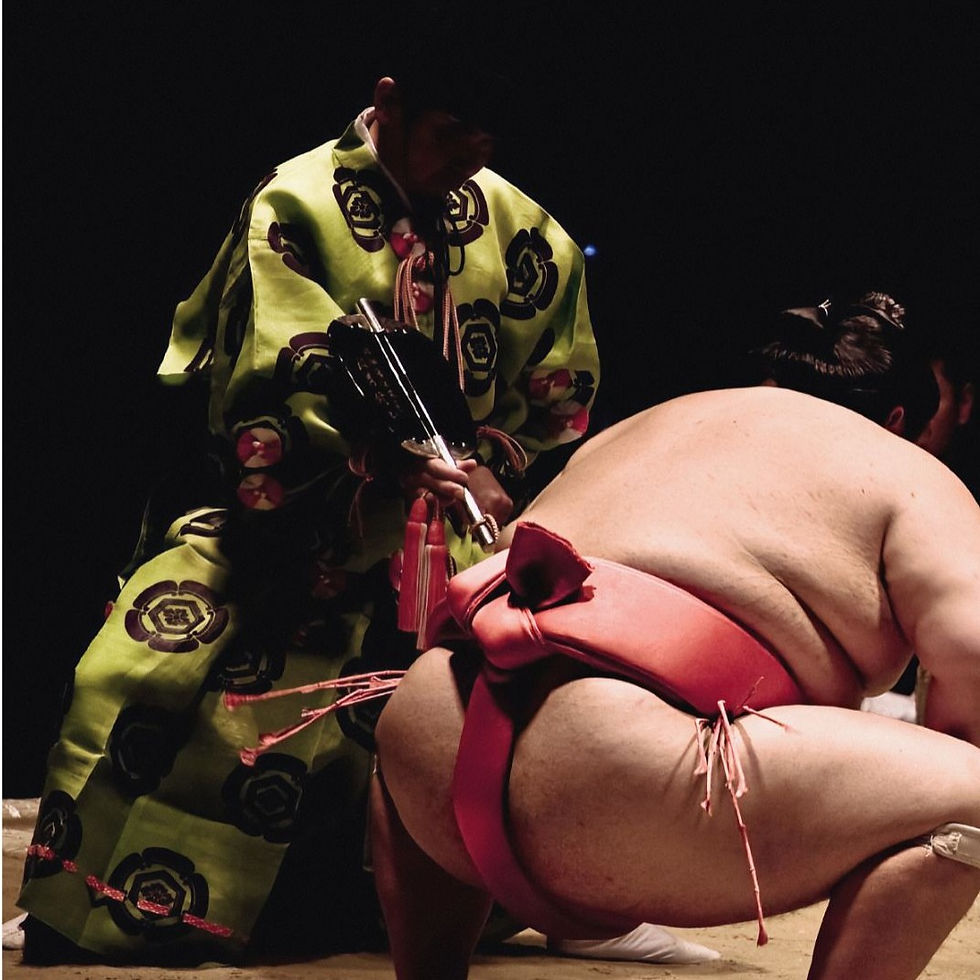
Tokyo Grand Sumo Tournament 2026 — A special program in which you learn the history, rituals, and tactics of sumo before watching an official tournament match.
Meiji Shrine and Kagurazaka (Coming Soon) — Using the idea of "Japanese spirit, Western knowledge" (wakon yosai) as a guide, explore Japan's modernization during the Meiji era alongside Kagurazaka, where tradition and international culture still coexist.
Koishikawa Korakuen and Kagurazaka (Coming Soon) — Visit a feudal-era garden and a former samurai neighborhood to learn about samurai values and the Edo aesthetic of iki.
In and around Kagurazaka, we also offer the following private cultural experiences:
You can book a single experience on its own, or combine several into an itinerary designed around your own interests.
Explore our private guided tours and discover Tokyo with guides who bring its history and living culture to life.


Comments