


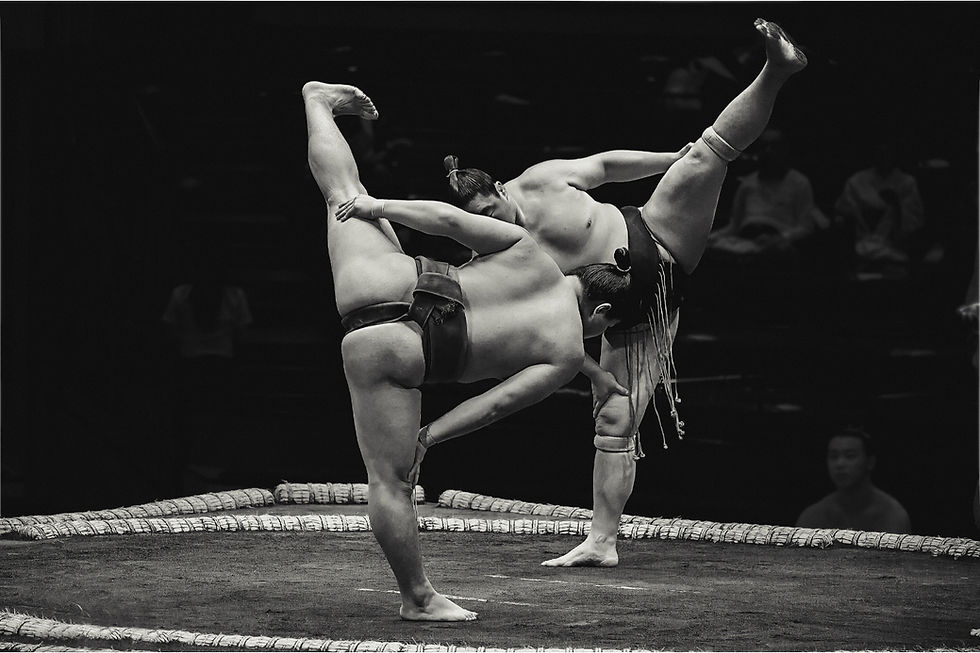
Tokyo Grand Sumo Tournament 2027
Understand Japanese Culture Through Sumo
January 12, 2027 only
Limited to 18 guests — now accepting reservations
¥39,600 per person (tax included)
Kagurazaka & Beyond — Special Edition

Understand Japan Through Grand Sumo
More than a sport. A gateway to understanding Japan.
January 12, 2027 only
18 guests maximum — now accepting reservations
¥39,600 per person (tax included)
UPDATE — September 30: We have secured official tickets for the January 12, 2027 Tokyo Grand Sumo Tournament. Following our sold-out September 2026 experience, we will return to Ryogoku with another small-group Grand Sumo Tournament Experience, limited to just 18 guests. Guests on our Priority Waitlist will receive advance access before reservations open to the general public.→ Join the Priority Waitlist
Priority booking will open first for guests on our Priority Waitlist. Any remaining places will then be released to the general public.
For travelers who want to understand Japan, not just see it.
Learn sumo over lunch. Walk through historic Ryogoku. Experience the Grand Tournament with a guide who has followed the sport for nearly 50 years.
Getting a ticket is hard enough. Understanding what you're watching is harder.
Most visitors watch sumo the way they watch something they don't understand — they see movement, but miss the meaning.
Why does the referee carry a short sword? What does the salt actually purify? Why does the wrestler stomp the earth before a bout?
This tour answers every question before you set foot in the arena.
To make genuine discussion possible throughout the day, we intentionally keep the ratio to approximately one guide for every five guests.
This is not a tour built around a ticket. It is built around understanding.
Want to go deeper before you arrive?
We have written three guides to help you understand what you are about to watch — before you set foot in the arena.
→ Why Do Sumo Wrestlers Throw Salt? Understand Japanese Culture Through Sumo
→ How to Watch Sumo in Tokyo Like a Japanese Fan: 10 Things That Make Every Bout More Exciting
→ How to Get Sumo Tickets in Tokyo 2027 — Official Sales Dates & Insider Tips
Your Host: A Lifetime with Sumo
Shinya Yamada, CEO of EDO KAGURA, has followed professional sumo for nearly 50 years — recording every tournament on television to ensure he never misses a bout. Over that time, he has watched more than 10,000 top-division bouts.
As a baby, he was blessed by Yokozuna Wajima. As a judo black belt, he learned how balance, leverage and body positioning determine the outcome in the moment of contact.
Today, he helps visitors see what most spectators never notice.
How This Tour Works
Learn — Sumo culture, history, and tactics over lunch
Walk — Ryogoku's Edo-period streets and sumo heritage sites
Watch — Grand Sumo Tournament at Ryogoku Kokugikan, with new eyes
Is This Journey For You?
This is not a ticket tour.
It is designed for travelers who want to understand Japan — not simply watch it.
✓ First-time visitors to sumo who want to truly understand what they are seeing
✓ Travelers who have visited Japan before — and want to go deeper
✓ Luxury FIT travelers seeking authentic cultural depth
✓ History and culture enthusiasts curious about Shinto, samurai, and Edo Japan
✓ Anyone who believes the best experiences begin with understanding
Three Dimensions of Sumo

01: Sumo as Shinto Ritual
Every gesture on the dohyo has a meaning. The stomping drives evil from the earth. The salt purifies the sacred ring. Sumo has been a living ritual for 1,500 years — and it still is.
02: The Samurai & Edo Spirit

Ryogoku is not just a neighbourhood. It is where Edo still breathes. We walk to Eko-in, the birthplace of professional sumo; past the site of Lord Kira's mansion, where a samurai vendetta played out in 1703; and to the birthplace of Katsu Kaishu, the man who navigated Japan from the shogunate into the modern era.
The referee standing in the ring still carries a dagger — a reminder of the responsibility once carried by samurai, and the seriousness with which sumo still treats judgment today.

03: The Tactical Art of Sumo
Push-out and force-out account for half of all bouts — yet most spectators miss why one wrestler wins and the other loses. Drawing on nearly 50 years of observation and a judo black belt, your host will share what to look for in the moment the wrestlers make contact.
The Itinerary
11:30 — Lunch & Sumo Culture Session
See sumo before you watch it
13:00 — Ryogoku Historical Walk
Walk through Edo's living memory
15:00 — Kokugikan & Sumo Museum
One final layer before the arena
15:30 — Juryo division begins
Learn to spot the patterns before the elite wrestlers appear
15:55 — Makuuchi Dohyo-iri
Edo, unchanged
16:00 — Yokozuna Dohyo-iri
The apex of sumo ritual
16:10 — Makuuchi bouts
Watch the predictions come to life
18:00 — Yumitori-shiki — closing bow ceremony
The day ends as it began: with gratitude
Meeting point
In front of the West Exit ticket gates (outside the gates) at JR Ryogoku Station
Google Map: https://maps.app.goo.gl/bSTMjccovSex5QMQA
What's Included
✓ Grand Sumo Tournament ticket (C-seat, chair)
✓ Professional cultural guide available in English, French, German or Spanish
✓ Small-group format with approximately one guide per 6 guests
✓ Authentic Japanese lunch
✓ Sumo culture and tactics briefing
✓ Ryogoku historical walking tour
✓ Sumo Museum entry
✓ Indoor cultural alternative on rainy days
Tours are offered in English, French, German, or Spanish, subject to guide availability.
A note on C-seat tickets
C-seat tickets are located in the upper tier of Ryogoku Kokugikan, a traditional bowl-shaped arena where the view of the dohyo is remarkably clear from every seat.
Traditional masu-style box seats sit closer to the ring, but require sitting cross-legged on the floor for several hours — which many visitors find tiring. C-seats offer a comfortable chair, an unobstructed view, and the freedom to enjoy the full experience without distraction. Those who wish to bring binoculars or a camera with a zoom lens are welcome to do so.
Understanding the ceremony changes the experience
Most international first-time visitors watch the pre-bout rituals — the salt throwing, the stomping, the repeated crouching sequences — without knowing what they mean. Once you understand that the salt is purifying a sacred space, that the stomping is driving evil spirits from the earth, and that the referee carries a live blade as a declaration of personal accountability for his decisions, the ceremony transforms from an interesting delay into the heart of what sumo actually is.
For our September 16, 2026 Grand Sumo Tournament Tour, EDO KAGURA prepared a complete bout-by-bout viewing guide covering all 20 Makuuchi matchups — including each wrestler's fighting style and a specific “WATCH” point for every bout.
The matchups change every day. So does our guide.
→ September 16 Makuuchi Bouts — EDO KAGURA Viewing Guide
Guests also receive a separate illustrated Sumo Culture Guide on the day of the tour, covering the rules, ranking system, tachiai, winning techniques, sacred rituals, and the 400-year history of Ryogoku.
This guide is prepared exclusively for tour participants and used during our lunchtime sumo culture briefing.

This is the view from a Chair C seat during our September 16, 2026 tour.
Guests who joined our September 16, 2026 Grand Sumo Tournament Tour shared the following:
"Thanks Shinya Yamada and your colleagues! You organised an amazing tour that included watching sumo! I really liked it!"
"Shinya, the CEO, is an incredible tour guide. It was clear how passionate he was about sumo, and the materials he prepared were very thorough. I had an incredible time with EDO KAGURA and highly recommend them. Especially for a sumo tour!"
Pricing & Booking
Most visitors leave the arena having watched sumo. They know who won. Few understand why.
Our goal is that you leave understanding it.
Prepare Your Visit — Read Our Sumo Guides
The more you understand before entering the arena, the more exciting every bout becomes.
→ How to Get Sumo Tickets in Tokyo 2027 — Official Sales Dates & Insider Tips — Official channels, seat types, and what to avoid
→ Why Do Sumo Wrestlers Throw Salt? — The Shinto ritual that explains Japanese culture
→ How to Watch Sumo in Tokyo Like a Japanese Fan — 10 things that make every bout more exciting
For travelers who want to understand Japan, not just see it.
JPY 39,600 (tax included) per person (Pricing may vary in future tournaments.)
See Sumo Through Japanese Eyes.
Limited to 18 guests. Reservations close once all places are filled.
How to Book
This experience runs on one date only: January 12, 2027.
To reserve your place, simply let us know how many guests you would like to book for. We will then send you a payment link to complete your reservation. Your booking is confirmed upon receipt of payment.
This experience is limited to 18 guests in total. Once capacity is reached, bookings will close.
Good to Know
Dietary requirements
The lunch reflects authentic Japanese food culture and is fixed for all guests. We are unable to accommodate vegetarian, vegan, halal, or kosher requirements. Please confirm your suitability before booking.
Rain
Should the weather prevent outdoor walking, we move to a carefully chosen indoor cultural experience in the Ryogoku area. The quality of the day is fully preserved.
Sumo Wrestlers
Our route passes several active sumo stables. There is a real possibility of encountering wrestlers arriving for training — though we cannot guarantee it.
Commentary during bouts
Out of respect for fellow spectators, in-seat commentary is kept to quiet, well-timed observations rather than continuous narration.
Dress code
No dress code required.
January in Tokyo is cold — please dress warmly. Layering is recommended as the arena can be cool during the afternoon session.
After the tournament
A small-group visit to Popeye, one of Japan's most celebrated craft beer bars, is available for up to 5 guests. Please indicate your interest at the time of booking. First come, first served.
Why is this tour part of Kagurazaka & Beyond?
Kagurazaka is where we introduce guests to the living traditions of Tokyo. But Tokyo's story extends far beyond one neighbourhood.
This special edition explores another pillar of Edo culture: Grand Sumo.
Just as geisha preserve the elegance of Edo hospitality, sumo preserves the rituals, values, and spirit that have shaped Japan for centuries.
Cancellation Policy
As tournament tickets are purchased specifically for each guest and cannot be returned, all bookings are non-refundable once confirmed. Please ensure you are available on January 12, 2027 before making your reservation.